
Commercial Roof Coating · Shelby County, KY
Shelbyville Metal Roof Coating
We coat commercial metal roofs in Shelbyville and nearby towns, from Saddlebred barns to warehouses. Every job starts on the roof with the screws, laps, and rust.
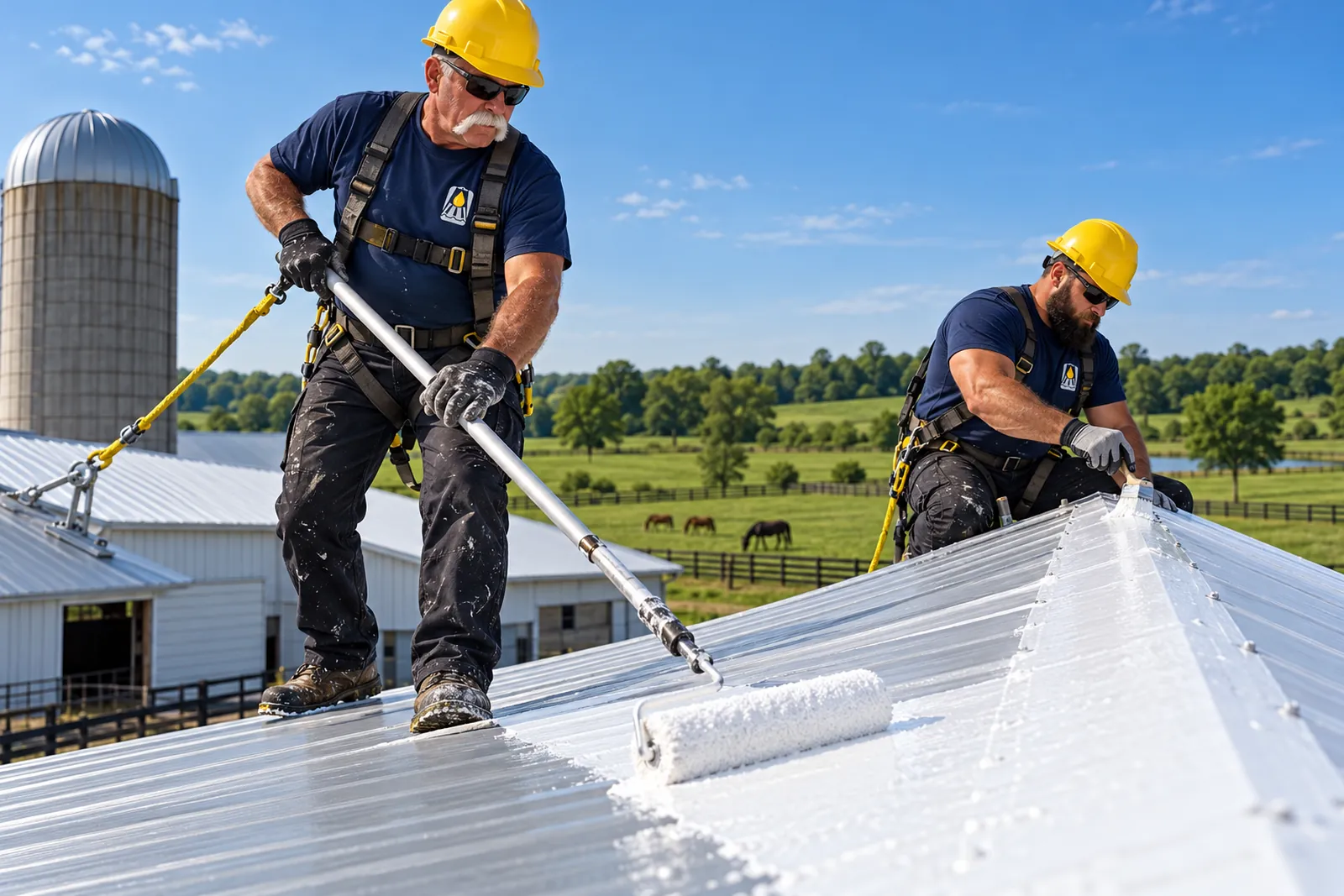
- Roof Walk Before Any Coating
- Every Screw Checked And Sealed
- Rust Primed Down To Solid Steel
Signs A Shelbyville Metal Roof Needs Coating
Most leaks on a panel roof start at a screw, a lap, or a trim joint. Here is what owners notice, what usually causes it, and how our metal roof coating work handles it.
Drips Under A Row Of Screws
Rubber washers harden in sunlight, and daily heat movement slowly backs screws out of the purlins until water follows the shank.
We drive loose screws snug, swap stripped ones for oversize screws, and cap every head with sealant before the base coat.
Water Inside Near An End Lap
Wind drives rain uphill under the top panel at horizontal end laps, and aged sealant there cracks a little more with each freeze.
Polyester fabric goes into a brushed base coat across the lap, so the joint can flex in summer heat without opening.
Orange Haze Around Fasteners
Rust bloom starts where the factory paint is thinnest: around screw heads, along cut edges, and at the low ends of panels.
Crews brush or grind to firm steel and prime it with a rust-inhibiting product. Rust-through holes become panel work first.
Standing Water Behind A Rooftop Unit
Low-slope sections dam up on the upslope side of curbs, where leaves and grit collect and water sits for days after rain.
The debris dam gets cleared, the curb gets fabric flashing, and silicone moves to the top of the list where puddles keep returning.
Daylight Through Cracked Skylight Panels
Faded fiberglass panels turn brittle with age, crack in hail, and then leak along their side laps.
Each panel is sorted into replace, swap for steel, or keep, and its laps are sealed before the field coat.
How A Metal Roof Coating Job Runs
Prep takes more labor than the coating itself on most metal roofs. These four steps happen in this order on every building we coat.
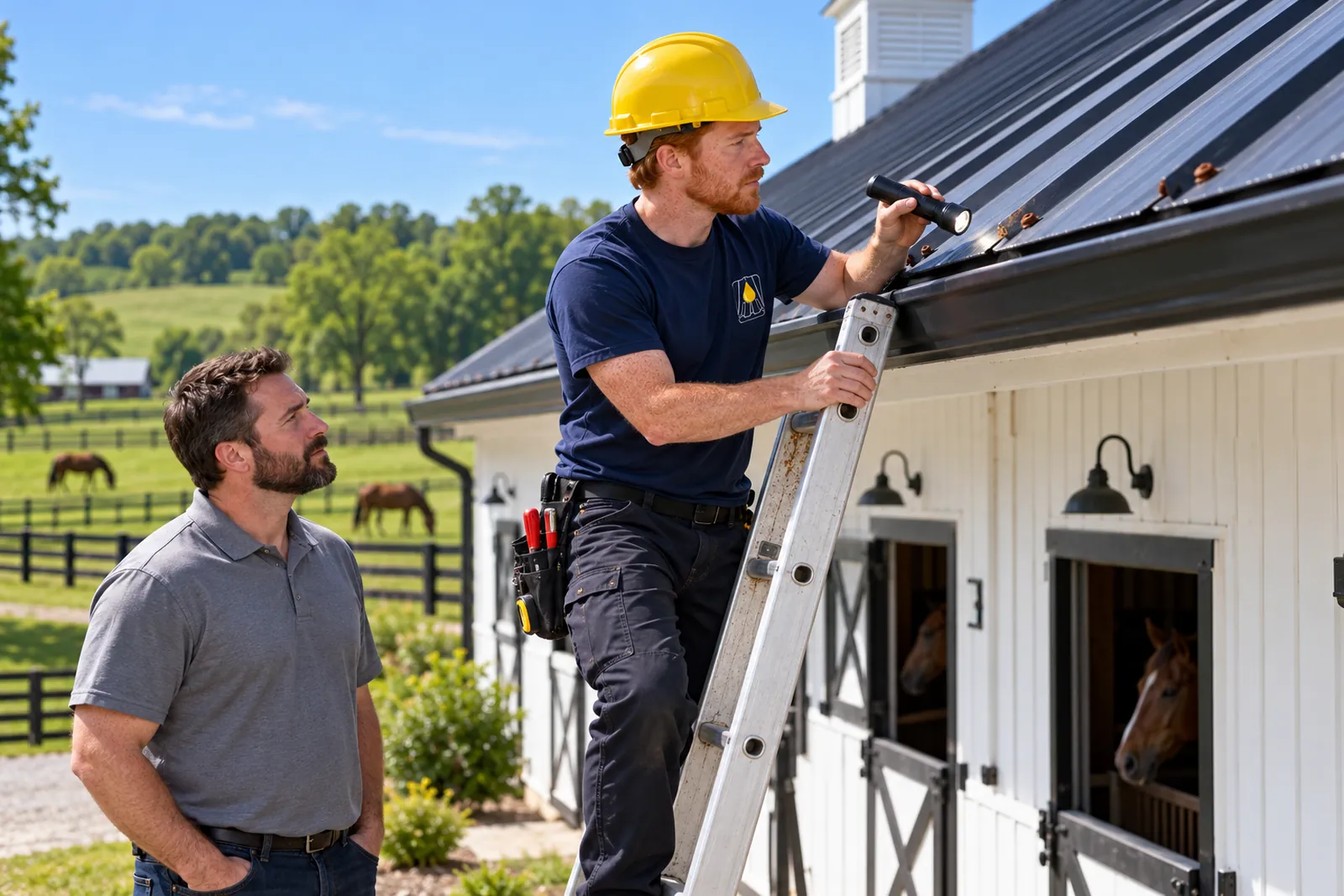
Inspect Your Roof
A crew walks the panels and the space underneath, photographs backed-out screws and open laps, and checks panels underfoot for soft spots or rust-through.
Wash And Prime The Steel
Pressure washing strips chalky factory paint, dirt, and droppings. Rusted spots are brushed or ground to firm metal, then primed once the panels are fully dry.
Detail Screws, Laps, And Trim
Each fastener is tightened, replaced, or capped. End laps, side laps, ridge caps, and wall flashings get reinforced fabric set into a brushed coat.
Coat The Roof In Sections
Base and top coats go on by spray or roller at the planned film thickness, checked with a wet-mil gauge, with each section sealed before the crew leaves.
Five Coating Systems For Commercial Roofs
Metal roof coating is our main service. Silicone, acrylic, spray foam, and shingle coatings cover the roofs that call for a different system.
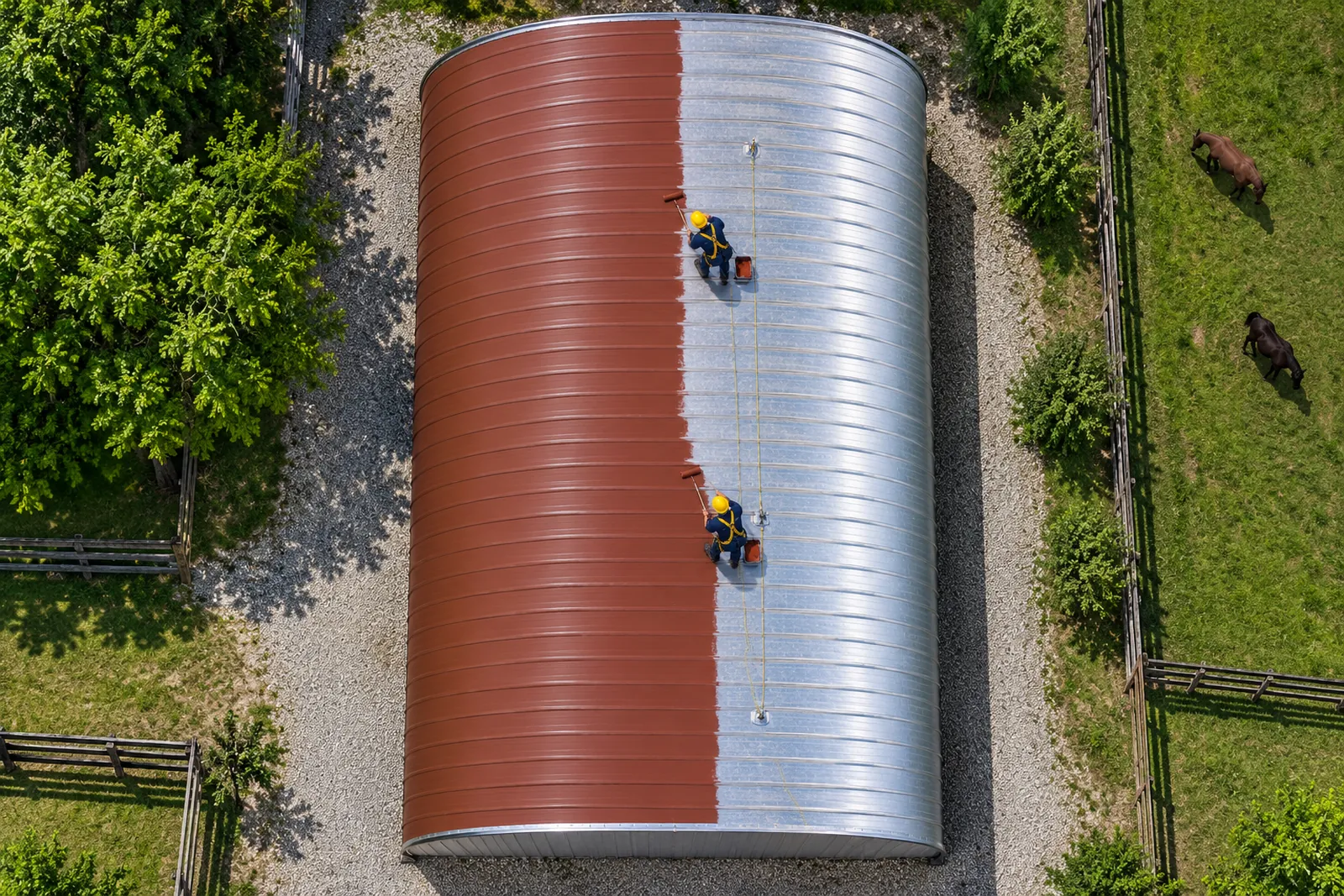
Metal Roof Coating
We seal fasteners, end laps, side laps, and trim on exposed-fastener and standing seam roofs, prime rust to firm steel, and coat the panels. It fits warehouses, shops, barns, and canopies where the steel still carries its load.
Best For
- R-panel roofs leaking at screws and laps
- Chalky paint over firm steel
- Barns and shops with surface rust
Not For
- Panels rusted through across the roof
- Purlins sagging between frames
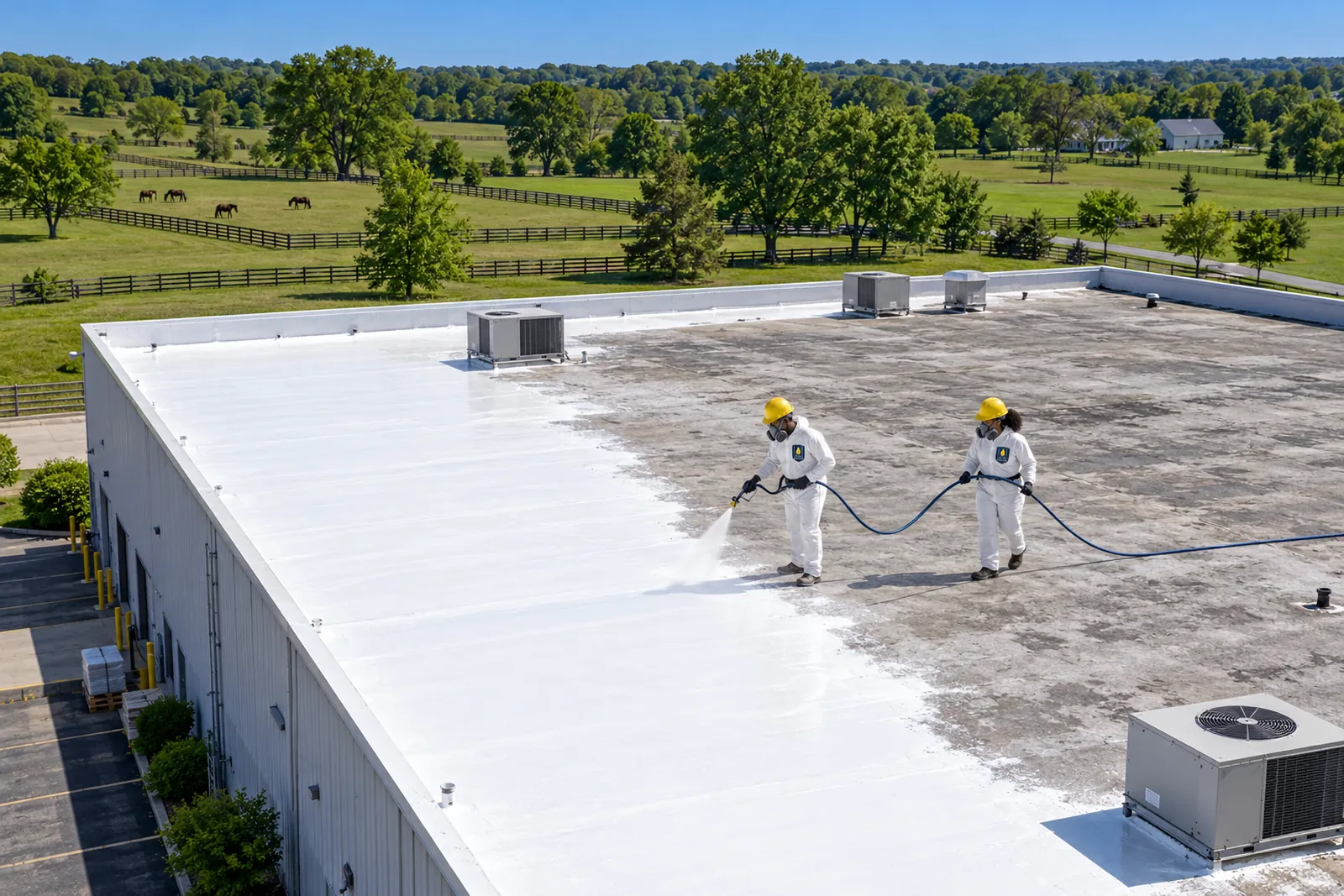
Silicone Roof Coating
Silicone holds up where water sits after rain, so it goes on low-slope metal and flat sections with puddles behind rooftop units. It also tolerates cooler, damper days, which helps late-season jobs in Shelby County.
Best For
- Low-slope metal with flat spots
- Roofs crowded with curbs and units
- Fall work when nights turn cool
Not For
- Roofs that will want acrylic recoats later
- Walk paths with heavy service traffic
Acrylic Roof Coating
Water-based acrylic fits steeper barns, canopies, and panel roofs that shed water fast. It stays cleaner than silicone, carries less odor near occupied space, and accepts acrylic recoats, though it needs warm, dry weather to cure.
Best For
- Steep barns and canopies that drain fast
- Occupied offices and horse barns
- Owners planning simple future recoats
Not For
- Sections where water ponds for days
- Cold, damp weeks late in the year
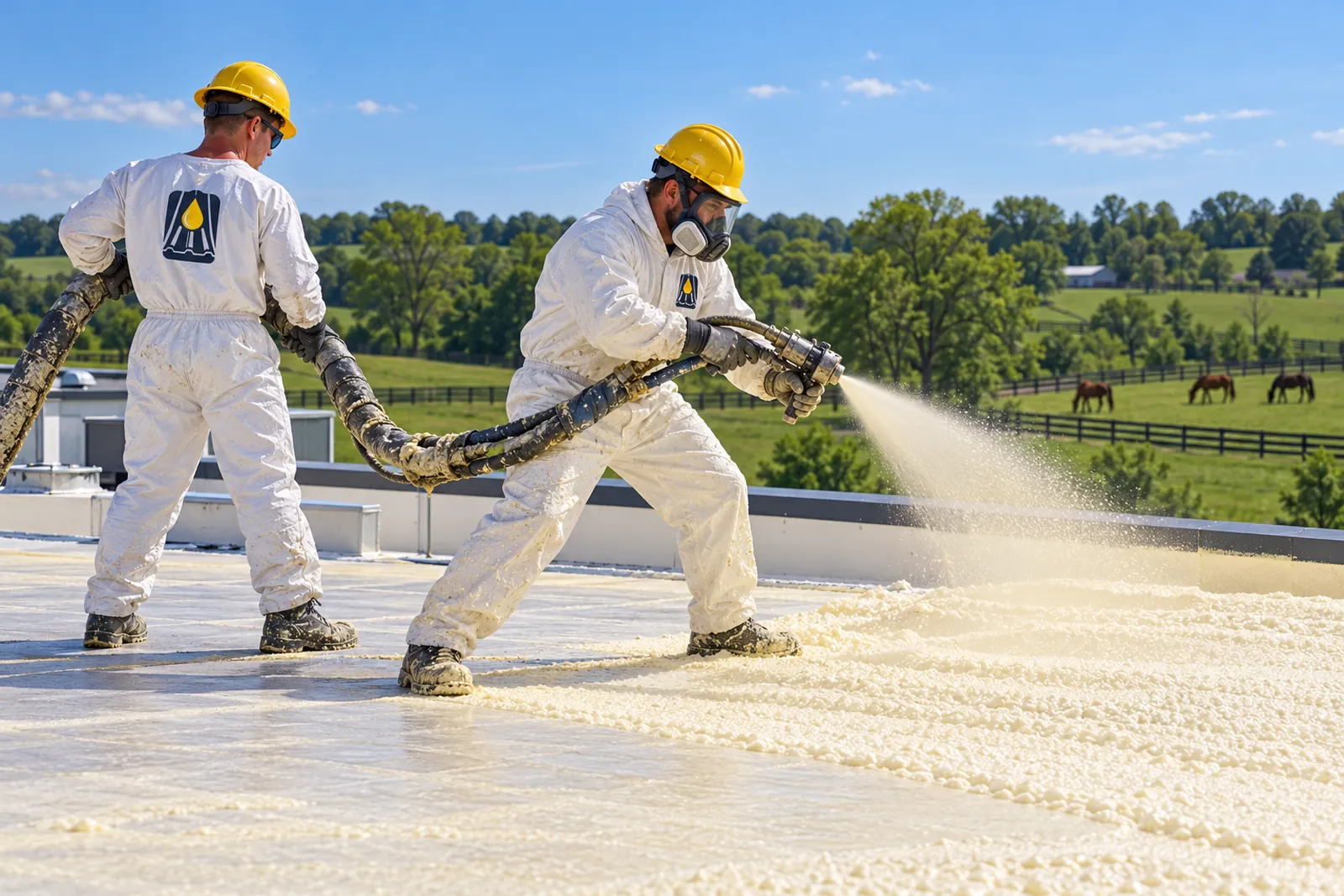
Spray Foam Roofing
Spray foam adds inches of closed-cell insulation, about R-6 per inch by DOE guidance, plus a thick leak barrier under a protective coating. It suits uninsulated shops and barns where condensation drips from the panels.
Best For
- Uninsulated shops with dripping panels
- Roofs leaking at nearly every rib
- Owners who want R-value added
Not For
- Curbs and gutters that must stay at height
- Insulated warehouses that only need sealing
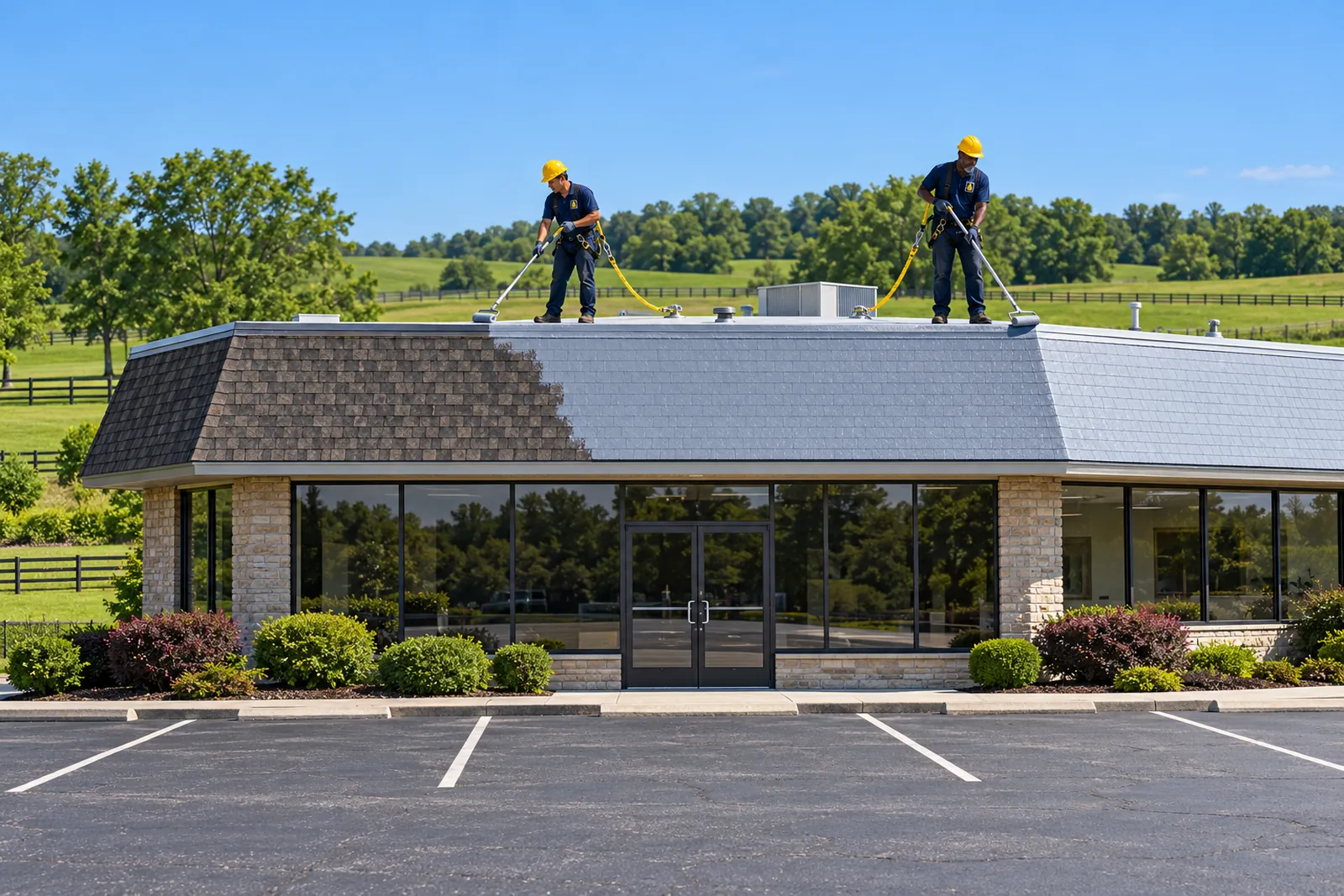
Shingle Roof Coating
Some strip centers, offices, and churches carry asphalt shingle sections beside their metal or low-slope roofs. We coat those sections only when the shingles lie flat, hold their granules, and both makers approve the product.
Best For
- Flat-lying shingles with most granules
- Pitched sections on commercial buildings
- Owners who checked shingle maker terms
Not For
- Curled, cupped, or brittle shingles
- Roofs due for replacement anyway
Water Coming In Along A Panel Lap?
Call us with the rough roof size, the panel type, and where the drips show up inside. That is enough to plan the first roof walk.
Is Your Metal Roof Ready To Coat?
Coating works when the steel underneath still does its job. These lists separate the roofs we coat now from the ones that need panel or frame work first.
Coat It Now
- Panels firmly attached at every purlin
- Leaks traced to washers or lap seams
- Rust bloom that brushes off to firm metal
- Dry insulation and dry space below
- Chalky or faded paint on intact steel
Fix This First
- Rust-through holes across many panels
- Panels lifting at the eaves in wind
- Purlins sagging between frames
- Wet insulation above the ceiling
- Old silicone that only bonds to more silicone
What A Coated Metal Roof Gives You
These benefits hold when the panels are firm and the prep is done right. Each one depends on what we find during the roof walk.
Cost Below Re-Paneling
Coating keeps the existing steel in place, so you pay for prep and coating instead of new panels, trim, and the labor to swap them. Repairs to a few bad panels fold into the same job.
The Building Stays Open
Work happens on top of the panels with no tear-off, so offices, shops, and barns keep running. Intakes near the work get covered for short windows and vehicles move off the eaves.
Less Steel Headed To A Landfill
Old panels stay on the building instead of filling dumpsters. Only rust-through sheets and brittle skylight panels come off, and those go out a few at a time.
A Surface You Can Recoat
When the film wears thin years from now, a cleaned roof can take another coat of the same chemistry. A yearly walk catches worn ribs and ridge caps while a touch-up still fixes them.
Our Metal Roof Coating Service Area
We take metal roof coating work in Shelbyville and ten towns nearby. Outside them? Please call us or send us a message.
| Town | County | What We See On Roofs There |
|---|---|---|
| ShelbyvilleMain Town | Shelby | Saddlebred barns, shop buildings, and warehouses with exposed-fastener panels and dried screw washers. |
| La Grange | Oldham | Low-slope metal tucked behind brick parapets downtown, with coping caps and through-wall scuppers to keep open. |
| Crestwood | Oldham | Standing seam mansards, entry canopies, and pitched metal accents that customers see from the parking lot. |
| Simpsonville | Shelby | Large production and distribution roofs crowded with curbs, duct supports, and electrical disconnects. |
| Eminence | Henry | Farm shops and unheated equipment sheds with rust-through at the eaves and faded skylight panels. |
| Carrollton | Carroll | Eave panels and gutter outlets where trapped leaves feed rust bloom, plus dent checks after hail. |
| New Castle | Henry | Ridge caps, eave closures, and rake trim working loose on older panel roofs around the county seat. |
| Pleasureville | Henry and Shelby | Rust bloom on fastener heads, open end laps, and loose ridge caps on panel roofs in both counties. |
| Campbellsburg | Henry | Service masts and rooftop units near the eave that need clearance before fabric and coating go down. |
| Bagdad | Shelby | Pole buildings and equipment sheds with brittle fiberglass skylight panels and red rust along the drip edge. |
| Waddy | Shelby | Shops and warehouses with conduit, light fixtures, and disconnect boxes strapped across the panels. |
Metal Roof Coating Questions From Shelby County
Short answers to what owners ask first. More are in our metal roof coating FAQ.
Coating Basics
What does a metal roof coating actually do?
It lays a continuous rubbery film across the panels that seals screw heads and both kinds of laps and shields the factory paint from sun and moisture. The steel keeps carrying the load and the coating takes over the weather, which is why panel condition gets checked first.
Which commercial metal roofs are good candidates for coating?
Roofs with firmly attached panels, mostly surface rust, and dry space underneath. Around Shelby County that often means warehouses, shop buildings, horse barns, church fellowship halls, and strip-center canopies. Rust-through across many panels, panels lifting in wind, or sagging purlins send the job to panel or frame work first.
Weather In Shelby County
How do Kentucky rain and freeze-thaw cycles affect coated metal roofs?
The wear shows first at low eaves, clogged gutters, and loose screws. NWS Louisville logged 48.23 inches of precipitation at the airport in 2024 and a 3°F low on January 20. Each freeze and thaw flexes the steel, and an elastomeric coating stretches with it where stiff old sealant splits.
Is it too cold or humid in Shelby County to coat a metal roof?
Late spring through early fall is the best window, when panel temperatures stay above the maker’s minimum and dew burns off early. Steel cools fast at night, so mornings start later on shaded north faces. Silicone handles cooler, damper days than acrylic, so late-season jobs often switch to silicone.
Cost And Downtime
What affects the cost of coating a metal roof?
Square footage sets the base, then prep decides the gap between two roofs of the same size. Heavy rust scale, a full screw replacement on an R-panel roof, the chemistry and number of coats, film thickness, lift rental for tall eaves, and hand work at skylights and curbs all add to it.
Can my business stay open while the metal roof is coated?
Yes, in most cases, since the work stays on top of the panels with no tear-off. The main concern inside is odor from solvent products near rooftop air intakes, so those intakes are shut down or covered for short windows, and vehicles along the eaves move before spraying.
Get A Free Estimate For Your Metal Roof
Tell us about the building and the leaks, and we will set up a roof walk in Shelbyville or a nearby town.