
Spray Foam Roofing · Shelbyville, KY
Shelbyville Spray Foam Roofing
We spray closed-cell foam over commercial metal and low-slope roofs around Shelbyville, then coat it, when a building needs insulation and a thicker leak barrier than coating gives.
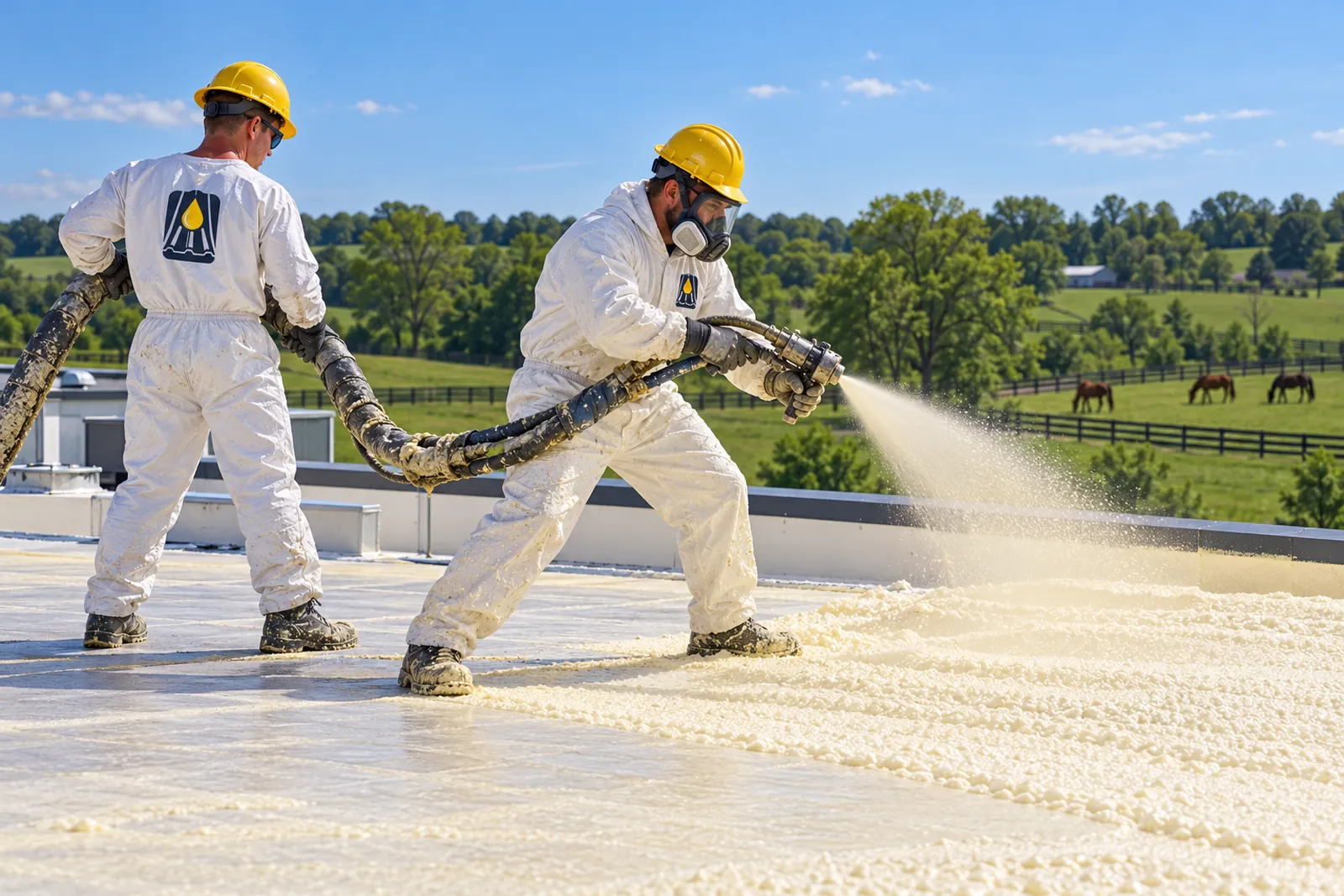
- Closed-Cell Foam, About R-6 Per Inch
- Curb Heights Planned First
- Coating Over Every Foam Layer
Is This Roof A Fit?
Foam changes the thickness of the roof, so it fits some buildings and complicates others. The two lists show both.
Good Foam Roofs
- Uninsulated shops and barns with dripping panels
- Metal roofs leaking at nearly every rib
- Owners who want R-value added
- Panels that are firm and dry
- Curbs and gutters that can be raised
Coating Alone Fits Better
- Insulated warehouses with a few leaky laps
- Roofs where curb heights must stay put
- Rooftop units with short gas and drain lines
- Air intakes that must run without a pause
- Owners who want the panel profile to show
Problems Spray Foam Solves On Metal Roofs
Foam earns its cost on buildings with these problems. Each one calls for insulation or a thicker barrier beyond a thin coat.
Drips Inside On Cold Mornings
Uninsulated steel chills overnight, and warm, damp air from inside condenses on it and drips onto equipment and stock.
Foam over the panels keeps the steel closer to indoor temperature, which cuts the condensation that sealing alone leaves in place.
Leaks At Almost Every Rib
On older R-panel roofs, washers and laps fail across the whole field instead of in a few spots.
After the screws are tightened, foam fills and covers ribs and laps in one continuous layer, so the leak barrier is inches thick.
A Shop That Bakes All Summer
Bare steel over a work floor carries heat straight down, and nothing under the roof slows it.
Closed-cell foam adds about R-6 per inch by DOE Building America guidance, and a reflective coating protects the foam from sunlight.
Units Sitting Low After The Foam
Each inch of foam shortens the exposed height of every curb, and gutters end up too narrow for the new roof edge.
We plan curb adapters and gutter extensions before spraying, and the HVAC work goes through its own mechanical permit.
Commercial Roof Coating Options for Shelbyville
Spray foam is one of four ways to protect a metal building in Shelby County. The table compares it with the thinner coatings.
| Option | Thickness | Insulation | Curbs And Gutters |
|---|---|---|---|
| Acrylic or silicone coating | A thin film | Little added | Stay as they are |
| Urethane base with a topcoat | A thin, harder film | Little added | Stay as they are |
| Spray foam with a silicone topcoat | Inches of foam plus coating | About R-6 per inch of foam | Often raised or extended |
| Spray foam with an acrylic topcoat | Inches of foam plus coating | About R-6 per inch of foam | Often raised or extended |
Benefits of Coating Your Roof
Foam adds insulation to the usual coating benefits. These four hold when the panels are firm and dry before spraying.
Old Panels Become The Deck
Foam goes directly over firm steel after the fasteners are tightened, so the old panels stay in place and the job skips removal, dumpsters, and an open roof.
Insulation Added From Above
Closed-cell foam adds roughly R-6 per inch on top of the panels, which helps a shop or barn that had none, without opening the ceiling or moving stock inside.
One Layer Over Every Lap
Ribs, laps, and screw heads disappear under a continuous foam layer, which replaces hundreds of separate joints that each needed their own sealant.
Recoat The Top, Keep The Foam
When the protective coating wears, it gets cleaned and recoated while the foam stays. Yearly walks look for thin coating and for damage from foot traffic or hail.
Panels Dripping On Stock Or Equipment?
Call us. Drips on cold mornings often come from condensation, and foam over the steel is the fix we compare against coating alone.
How Shelbyville Spray Foam Roofing Gets Installed
Foam work changes curbs, gutters, and air intakes, so planning fills the first steps. These four run in order.
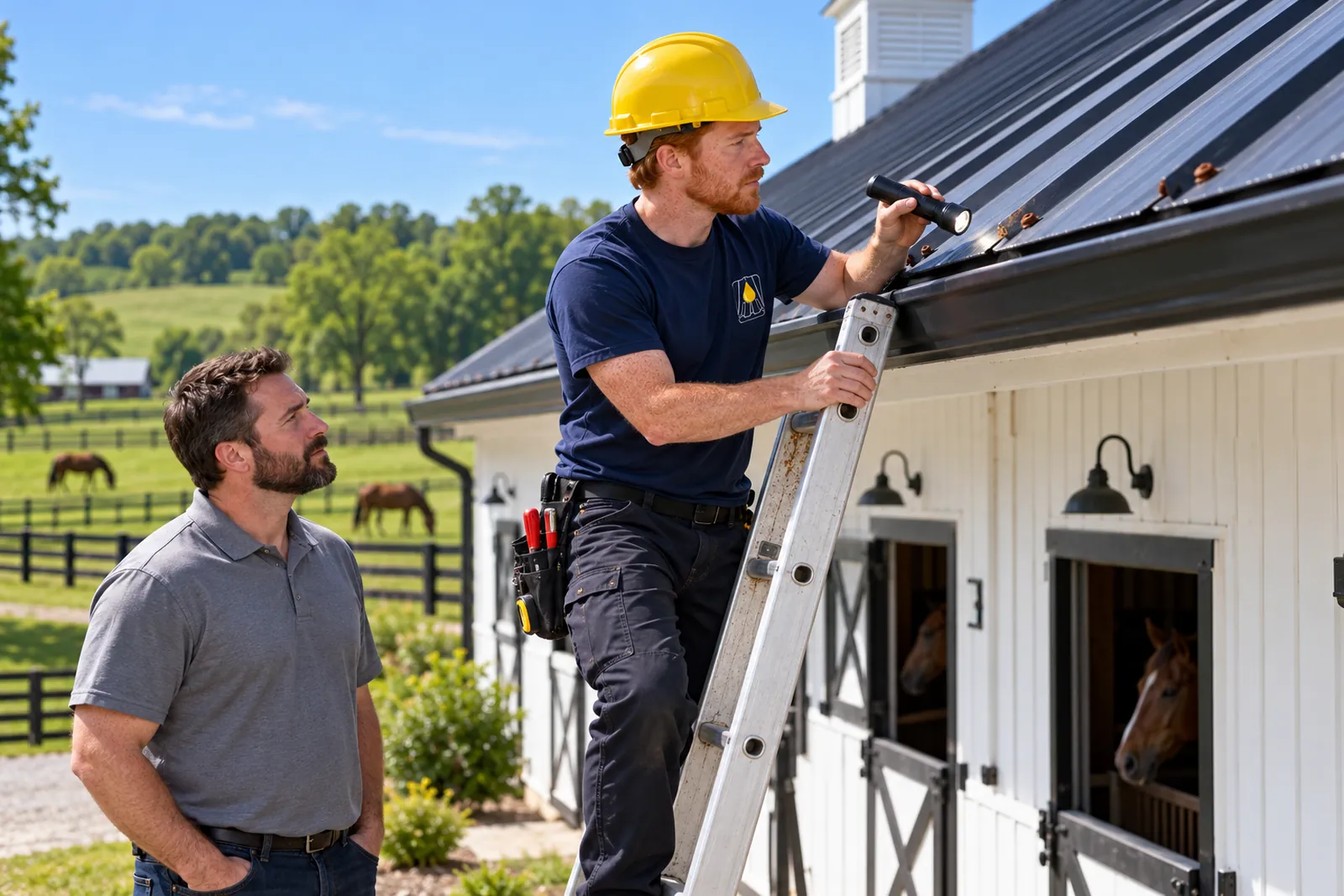
Inspect Your Roof
We check that the panels are firm and dry, measure curb heights and gutter widths, note gas and condensate lines, and find every air intake near the roof.
Plan Curbs And Intakes
Curb adapters, gutter extensions, and short shutdowns of intakes and exhaust fans are planned with the facility staff and any HVAC contractor involved.
Prep The Steel
Loose screws are tightened, rust is cleaned and primed, and the panels are dried, since foam needs a dry, clean surface to bond.
Spray Foam, Then Coat It
Foam goes on in passes to the planned thickness, measured as it builds, and a protective coating follows to shield it from sunlight.
Coatings To Compare With Foam
Sometimes a thin coating does the job. These three are the systems we weigh against foam.
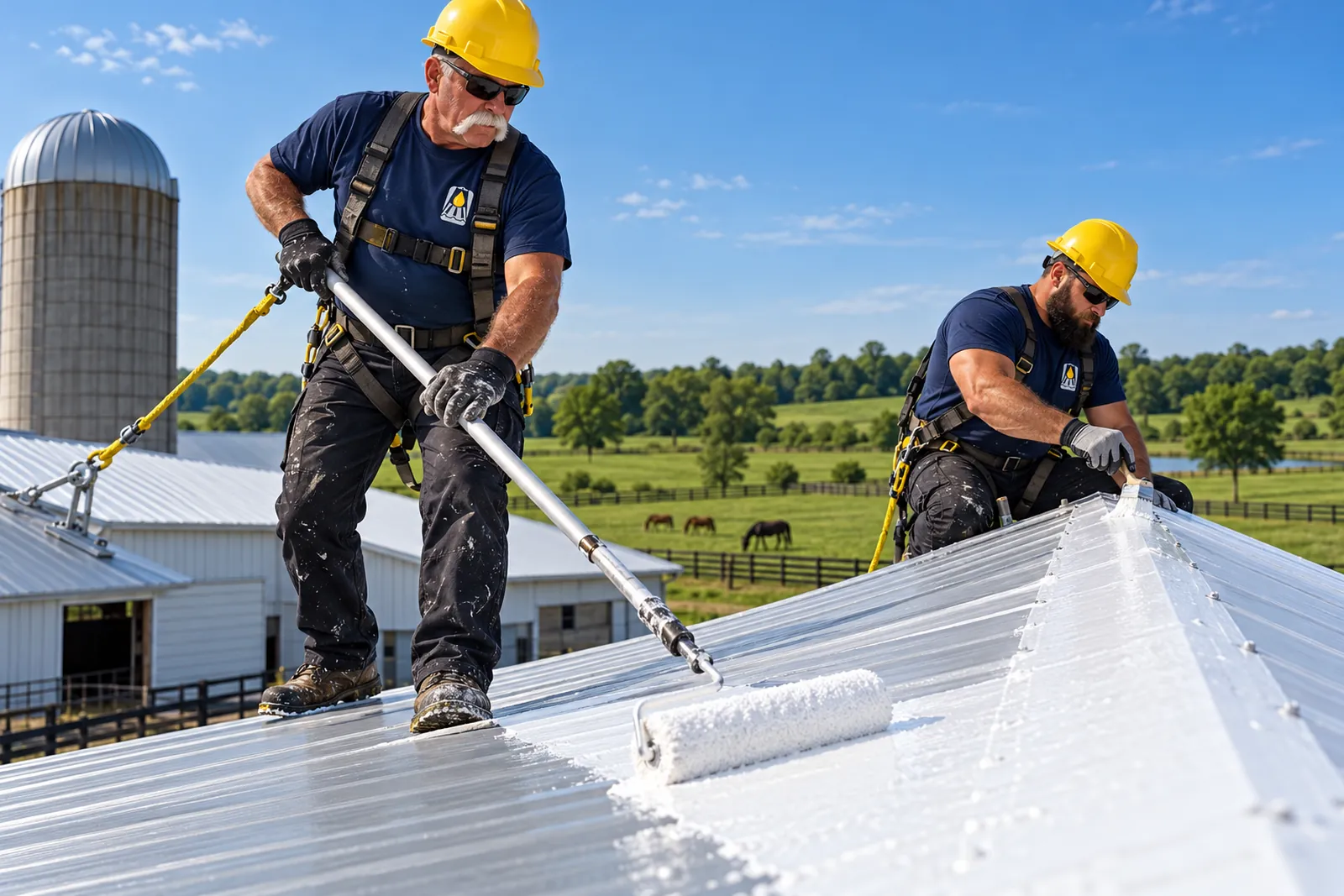
Metal Roof Coating
Insulated metal buildings that leak only at screws and laps need fastener work and a coating, which keeps the panel profile and curb heights.
Metal roof coating for insulated buildings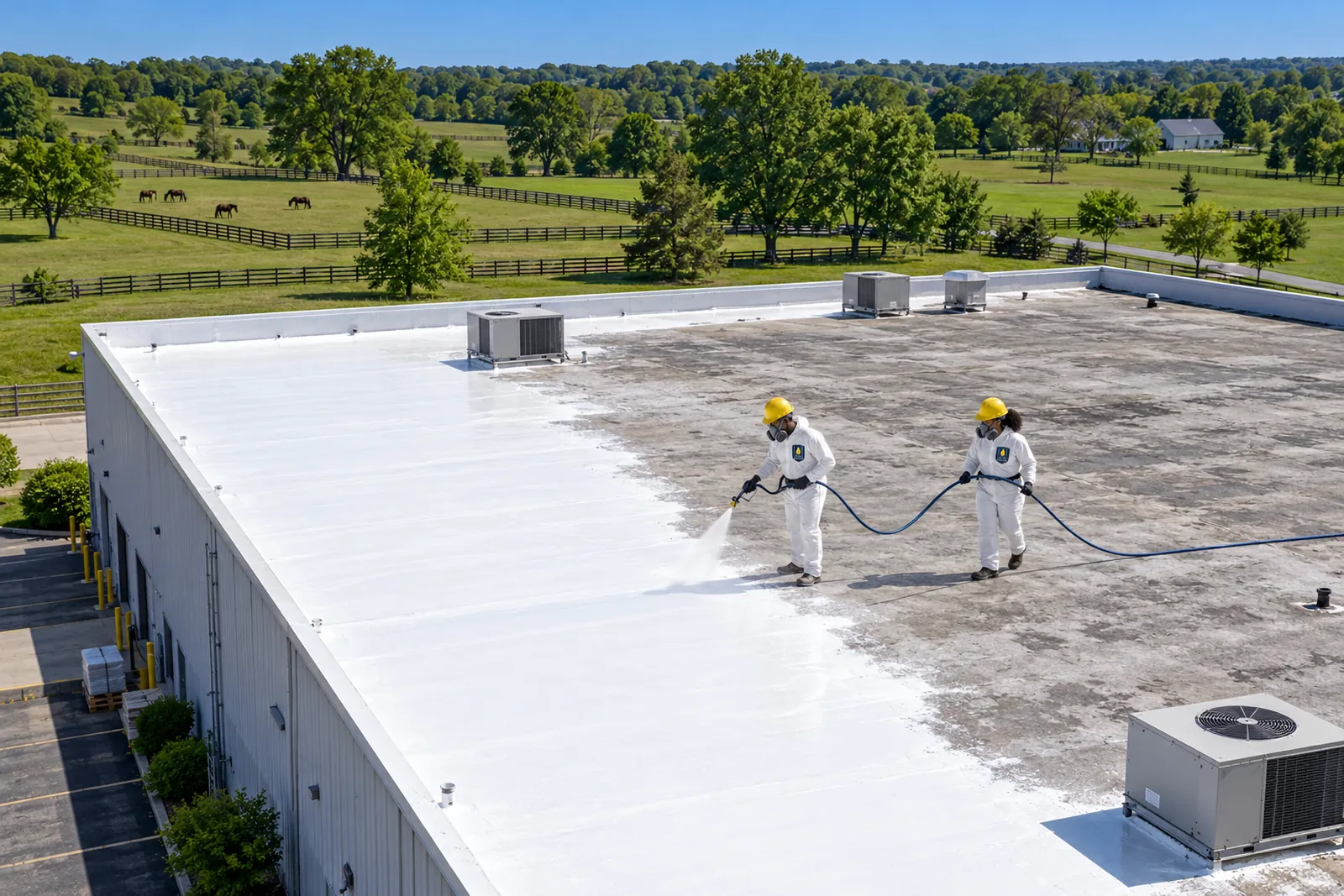
Silicone Roof Coating
Low-slope roofs that hold water and already have insulation take silicone directly, and silicone is a common topcoat over foam too.
Silicone roof coating in Shelbyville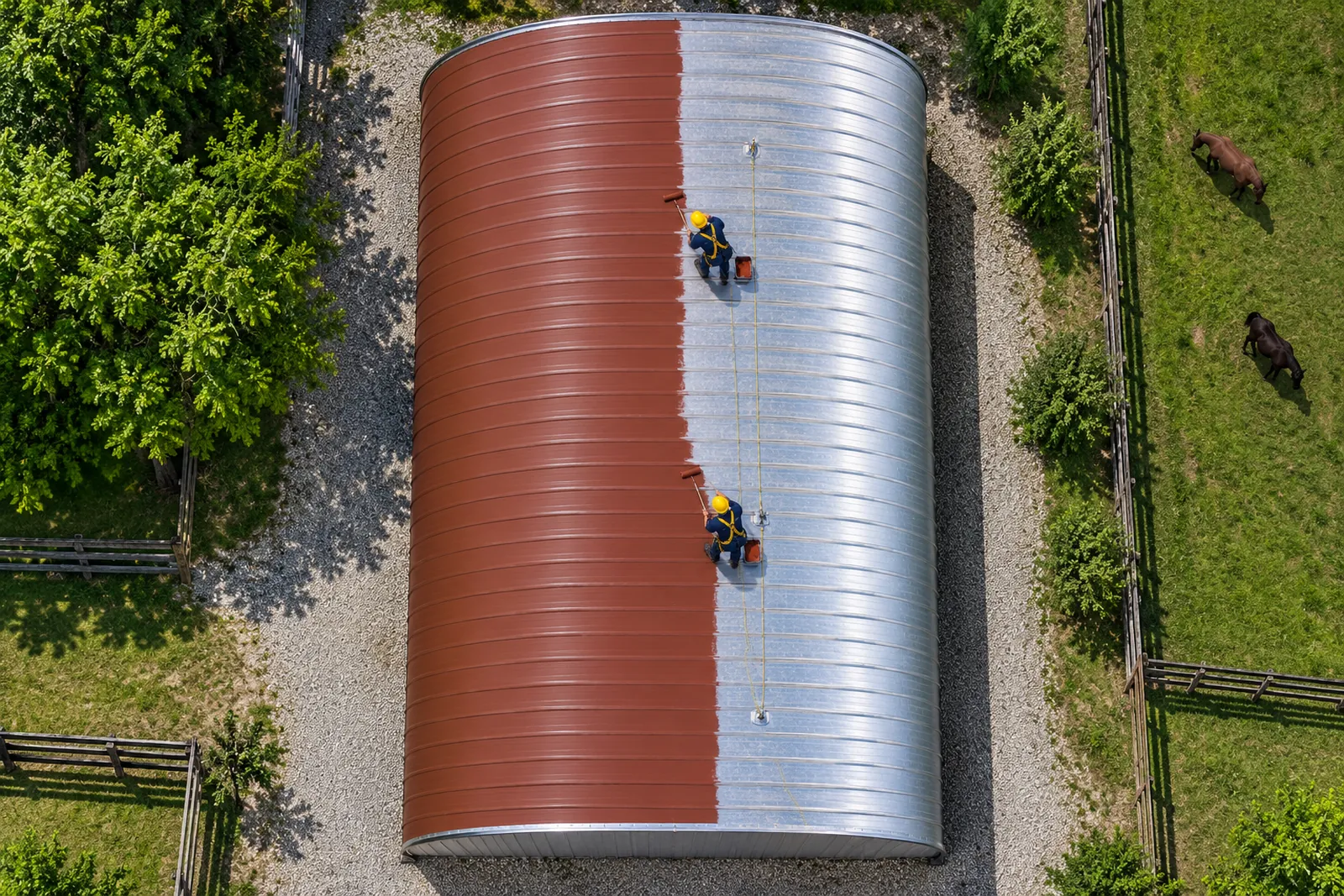
Acrylic Roof Coating
Pitched panel roofs that drain fast and have no condensation trouble can take acrylic, a water-based coat with low odor.
Acrylic roof coating in ShelbyvilleSpray Foam Questions
Answers on foam, insulation, taxes, and utilities.
Foam Or Coating
Can spray foam go over a metal roof instead of a coating alone?
Yes, when the owner wants insulation and a thicker leak barrier. Closed-cell foam adds about R-6 per inch, per DOE Building America guidance. Foam fits uninsulated shops and barns with dripping condensation, while coating alone fits insulated warehouses with leaky laps.
How thick does spray foam go on a metal roof?
The target comes from the insulation the owner wants and how much the ribs need filling, measured in inches rather than the mils of a coating. More inches add R-value but also raise curbs and roof edges, so the thickness is set during the roof walk.
Taxes And Rebates
Can a metal roof coating project qualify for Section 179?
It can. IRS Publication 946 lists roofs among improvements to existing nonresidential buildings that qualify, with a 2026 limit of $2,560,000, reduced once qualifying property passes $4,090,000. Repairs and improvements are treated differently and residential rental property is excluded, so a CPA decides for each building.
Do local utilities offer rebates for coating a metal roof?
Count on none until the utility confirms one in writing. LG&E and KU asked the Kentucky Public Service Commission in 2022 to expand nonresidential rebates centered on audits and efficient equipment. Ask the utility serving the meter whether a reflective roof or new rooftop units count, with the coating’s CRRC values in hand.
Equipment And Overspray
What happens to rooftop units when foam goes on?
Each inch of foam shortens every curb, so units get lifted onto taller curbs or adapters, and that HVAC work carries its own permit. Gas lines, condensate drains, and electrical connections are settled before foam starts, and intakes near the work shut down for short windows.
How is overspray kept off cars and neighboring buildings?
Wind is checked every work day, and spraying stops when it carries mist toward vehicles or property lines. Vehicles along the eaves move first, nearby air intakes are covered or shut off, and the crew works in sections with the downwind side protected.
Get A Free Estimate For Spray Foam
Tell us the roof size and whether the building is insulated, and we will check curbs, gutters, and intakes on a roof walk.