
Silicone Roof Coating · Shelbyville, KY
Shelbyville Silicone Roof Coating
We coat low-slope metal and flat commercial roofs with silicone where water sits after rain, once the ponding areas, curbs, and seams have been inspected and detailed.
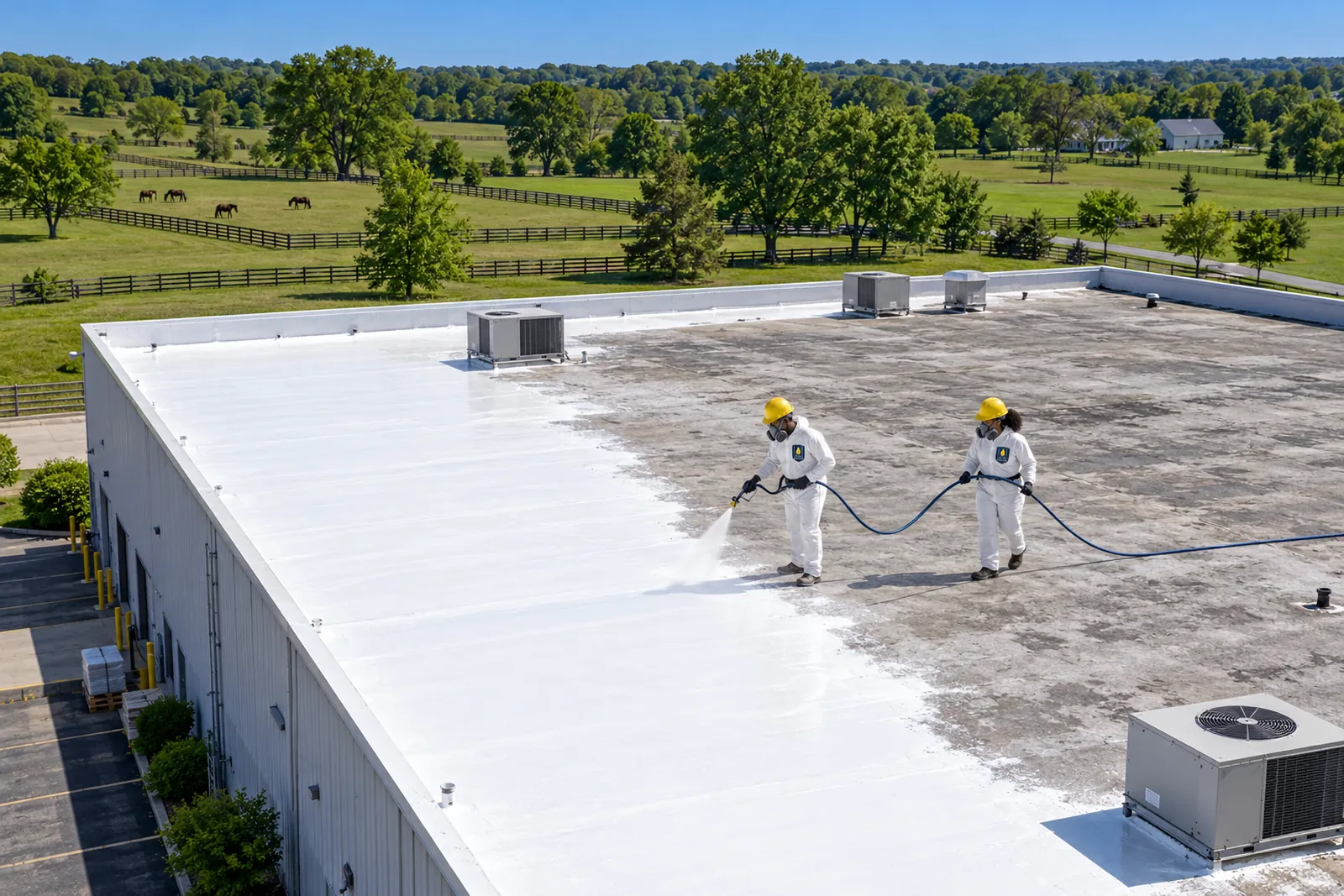
- Ponding Areas Mapped First
- Curbs Flashed Before The Coat
- Cooler Fall Days Workable
Is This Roof A Fit?
Silicone fits roofs that hold water and stay wet longer than a steep roof does. The second list covers what we fix or rule out before it goes on.
Good Silicone Roofs
- Low-slope metal with flat spots after rain
- Puddles on the upslope side of curbs
- Older silicone that needs a fresh coat
- Roofs coated late in the season
- Firm steel under the wet areas
Check Or Fix First
- Wet insulation under the ponding rings
- A sagging deck that keeps deepening a puddle
- Old acrylic or paint without an adhesion test
- Service paths with daily foot traffic
- Drains or scuppers clogged with debris
What Water Does On A Low-Slope Metal Roof
Standing water finds every weak spot on a roof with little pitch. These are the four patterns we see most before a silicone coating.
A Ring Of Dirt After Each Rain
Shallow flat spots hold water for a day or more, and the dirt left behind marks how far each puddle spreads.
We map every ring, check the steel and insulation under it, and plan silicone thick enough to sit in water.
Debris Piled Against A Curb
Panel ribs carry leaves and grit to the upslope side of rooftop units, where they dam water against the curb flashing.
Crews clear the dam, add fabric where the ribs meet the curb, and coat up the curb sides to the counterflashing.
Water Backing Up At A Scupper
Gutter outlets and scuppers clog with leaves, so rain backs up under eave trim and freezes there in January.
Outlets get cleared and resealed, gutter seams are detailed, and the eave trim is fastened before the field coat.
Soft Insulation Under A Wet Area
Leaks that have run for years soak the insulation facing below, and it stays wet long after the roof dries.
Wet areas are opened and dried or replaced first, since coating over trapped moisture lets the steel keep rusting underneath.
Commercial Roof Coating Options for Shelbyville
Silicone is one of four finishes for a low-slope roof in Shelby County. The table shows where each one lands next to it.
| Finish | Standing Water | Dirt And Brightness | What Recoats It |
|---|---|---|---|
| Silicone | Resists long ponding | Collects dirt and dulls over time | More silicone, after cleaning |
| Acrylic | Softens under long ponding | Stays cleaner and brighter | Acrylic over a cleaned surface |
| Urethane | Resists ponding | Moderate dirt pickup | The maker's published system |
| Spray foam with a silicone topcoat | The topcoat resists ponding | Same as silicone | Silicone over the foam as it wears |
Benefits of Coating Your Roof
Silicone earns these benefits on roofs that hold water. Each one assumes the steel and insulation under the wet areas checked out dry.
Coats The Roof In Place
Low-slope steel and old coatings stay on, so the budget skips tear-off and the deck stays covered through the job. Spending goes into cleaning, seam fabric, curb detail, and the silicone itself.
Rooftop Units Keep Running
Silicone goes on around curbs and duct supports while the building operates below. Intakes near the work are covered or shut down for short windows, scheduled with the people who run the building.
Handles The Puddles That Stay
Where flat spots hold water after every storm, a silicone film keeps its grip and stays elastic, which is the reason we pick it over acrylic on those sections.
Silicone Over Silicone Later
When the coat wears, a cleaned roof takes fresh silicone directly. Plan on silicone for every future recoat, since few products bond to cured silicone except more of it.
Puddles Still There Two Days After Rain?
Call us with where the water sits and how long it stays. Ponding near curbs and gutters points us to the first areas to check on the roof walk.
How Silicone Roof Coating Goes On In Shelbyville
Silicone needs a clean, dry, detailed roof under it. These four steps run in order on every low-slope job we take.
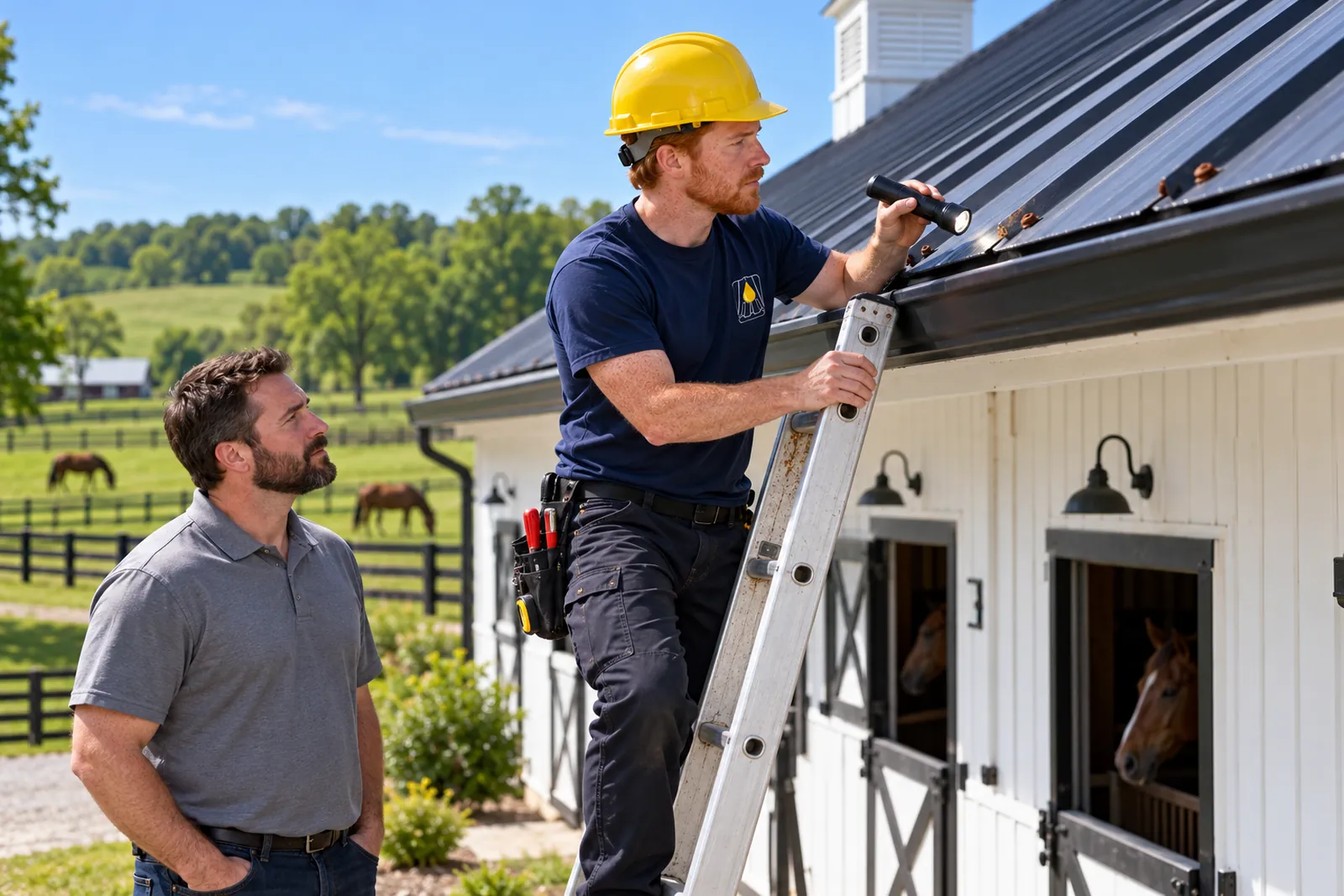
Inspect Your Roof
We walk the roof after rain when we can, mark each ponding ring, probe the insulation beneath wet areas, and photograph curbs, scuppers, and seams.
Dry Out And Clean
Wet insulation is opened and dried or replaced. The whole surface is washed with a cleaner the maker approves, and an adhesion patch goes on any old coating.
Detail Curbs And Seams
Fabric goes into a brushed base at curbs, laps, and penetrations. Debris dams are cleared and gutter outlets resealed so water can leave the roof.
Spray Or Roll The Silicone
Silicone goes on at the planned mils, heavier through ponding areas, and is checked with a wet-mil gauge. It tolerates the damp fall mornings that stall acrylic.
Other Systems For Low-Slope Roofs
These three systems cover the low-slope roofs where silicone is the wrong pick.
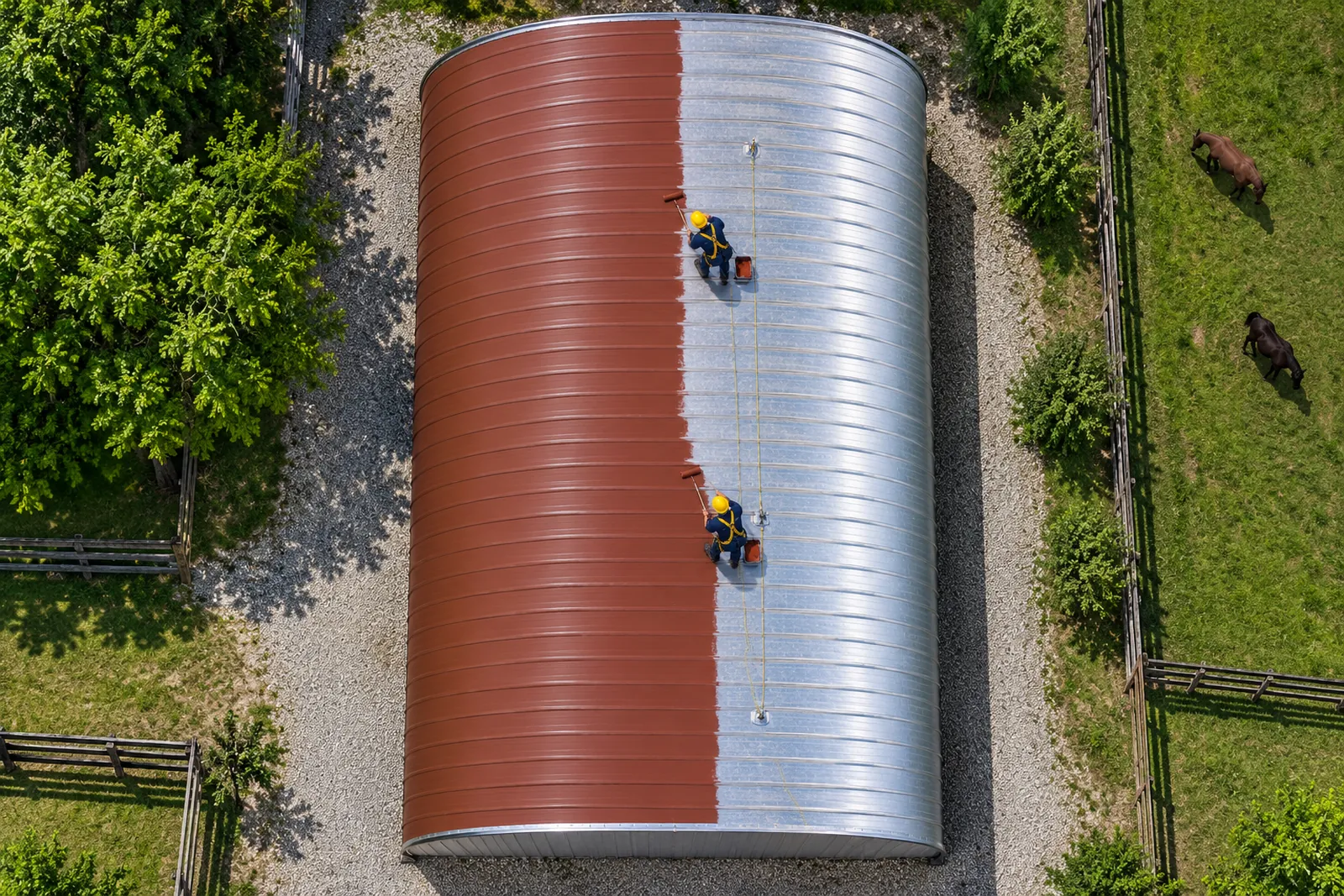
Metal Roof Coating
Panel roofs with leaks at screws and end laps start with fastener and lap work, then take whichever coating fits the slope.
Metal roof coating in ShelbyvilleAcrylic Roof Coating
Sections that drain within hours of rain can take acrylic, which stays brighter and recoats with more acrylic later.
Acrylic coatings for fast-draining roofs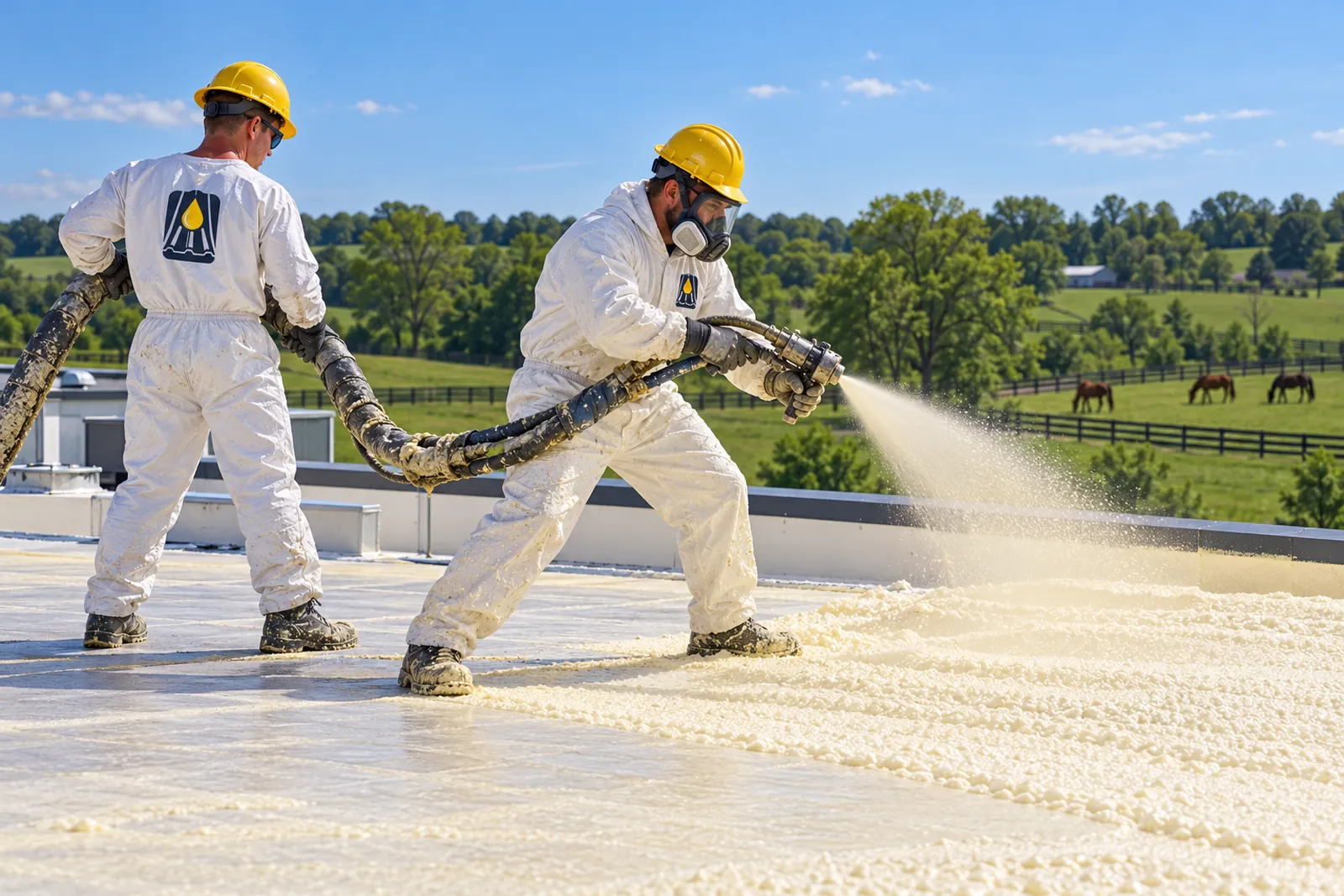
Spray Foam Roofing
Flat roofs over uninsulated space gain insulation from foam, with a silicone topcoat to protect it from sunlight.
Spray foam roofing over low-slope metalSilicone Coating Questions
What owners ask when a low-slope roof holds water.
Choosing Silicone
Silicone or acrylic: which is better over a metal roof?
Silicone wins where water sits after rain, so low-slope metal with flat spots around rooftop units leans that way. Acrylic fits steeper barns and canopies that shed water fast, and it stays cleaner. Urethane is a third option where impact and foot traffic wear the film.
When does urethane make sense on a metal roof?
On roofs with heavy service traffic, hail exposure, or walk paths between a hatch and equipment, because cured urethane is harder than silicone or acrylic. Aromatic urethanes need a UV-stable topcoat, aliphatic ones hold up in sunlight, and some systems use urethane only as a base over seams.
Timing And Weather
Can silicone go on in the fall in Shelby County?
Yes, more often than acrylic, because silicone tolerates cooler, damper conditions. Each work day is still checked for surface temperature against the dew point, rain chances during the cure, and wind toward parked vehicles. Frost on shaded north-facing panels pushes start times later on fall mornings.
How soon can it rain on fresh silicone?
The product data sheet for that coating sets the window, and many silicones resist rain soon after they skin over. We check the forecast against the cure period, spray only when the window fits, and seal each section before the crew leaves the roof.
Recoats And Upkeep
Can I put acrylic over my old silicone coating later?
Plan on silicone instead. Few products bond to cured silicone except more silicone, so a later recoat means cleaning the roof and applying fresh silicone. An adhesion patch on the dirtiest section confirms the bond before the full coat goes on.
How do I keep a silicone roof working?
Walk it once a year and after hail. Look for thin film on ribs, cracked sealant at skylight panels and pipe boots, and debris dams at curbs. Worn spots take a cleaned touch-up of silicone while they are still small.
Get A Free Estimate For A Silicone Coating
Tell us where the water sits and how big the roof is, and we will plan a walk across the low-slope sections.