
Commercial Roof Coating · Simpsonville, KY
Simpsonville Metal Roof Coating
We coat large metal roofs on Simpsonville production and distribution buildings, where rows of curbs, duct supports, and disconnects need detail work before the field coat starts.
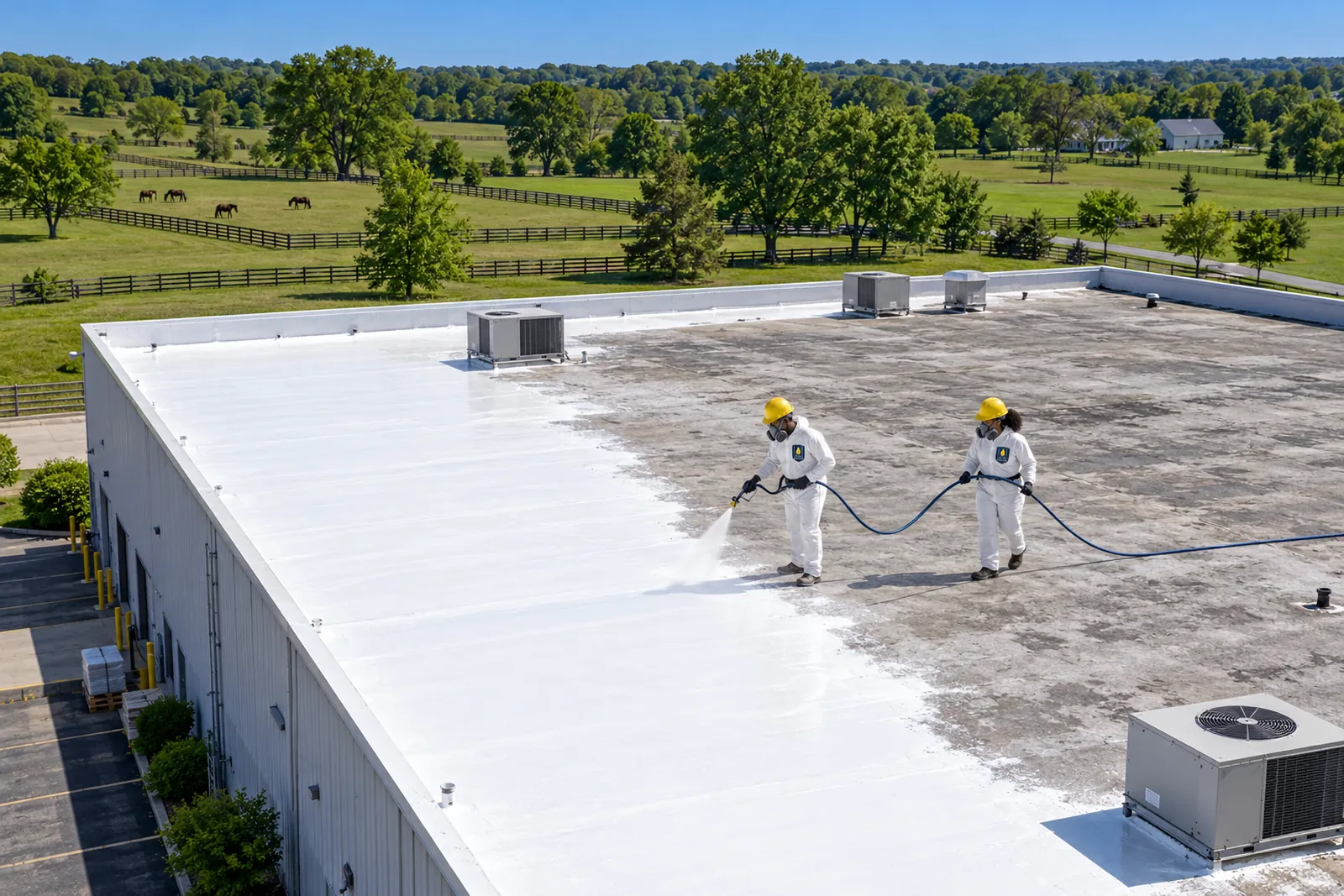
- Every Curb Detailed First
- Disconnects Planned With Facility Staff
- Coated In Daily Sections
Simpsonville Metal Roof Coating On Curb-Heavy Roofs
Big roofs near I-64 carry more equipment than most. The curbs, supports, and conduit set the pace of the whole job.
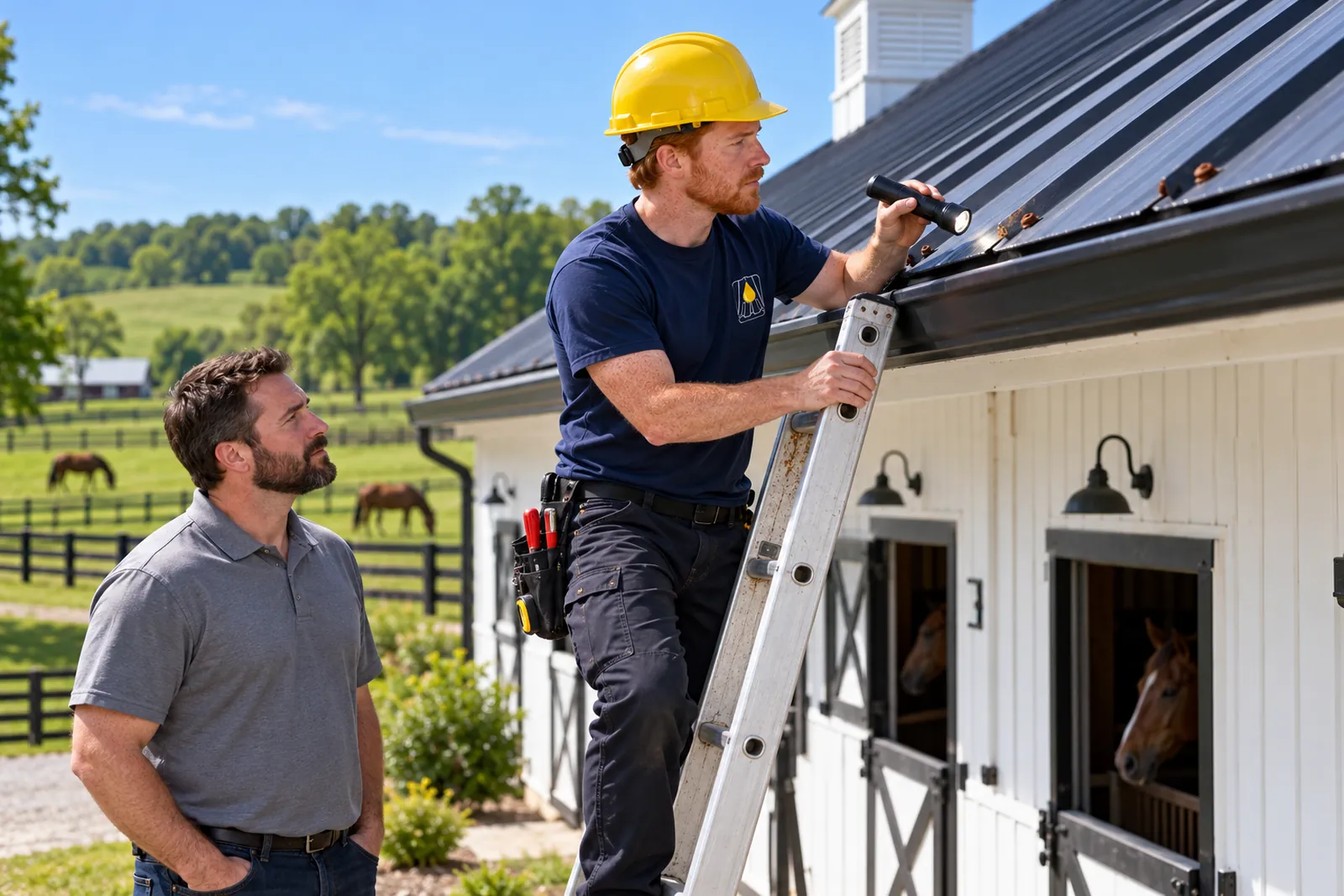
On a roof with dozens of rooftop units, the field panels are the quick part. Each curb flashing gets fabric where the panel ribs meet its upslope side, the spot where debris dams form, and every pipe support is lifted or set on a pad.
Kentucky's economic development cabinet announced KCC Manufacturing's plant on Buck Creek Road in 2021, a maker of roof curbs and HVAC sheet metal, which gives a sense of the building scale here. Roofs that size get coated in sections, each one sealed by the end of the day.
- Curb flashing fabric on the upslope side
- Conduit and duct supports lifted or padded
- Unit shutdowns kept short and scheduled
What Goes Wrong Around Rooftop Equipment
Industrial roofs leak at the equipment far more than in the open field. These four patterns come up on Simpsonville roofs.
Leaks Below A Row Of Units
Panel ribs funnel leaves and grit into the upslope side of each curb, and the dam holds water against the flashing.
Debris is cleared, the curb gets fabric where the ribs meet it, and the coating runs up the curb sides to the counterflashing.
Worn Spots Under Pipe Supports
Duct and pipe supports resting directly on the panels rub through the paint as the roof moves with heat.
Supports are lifted onto pads or new feet, the worn spots are primed, and the coating goes under each support before it is set back.
Stains Near An Electrical Disconnect
Conduit and disconnect boxes are fastened through the panels, and each fastener is another washer drying out.
Each penetration is sealed and wrapped, and any rewiring waits for the county electrical inspector once a permit number exists.
Coating Worn Thin On Service Paths
Technicians walk the same route between the hatch and the units, and that path wears faster than the rest of the roof.
Walk paths get extra film or a urethane base, and the path is marked so service trips stay on it.
Benefits of Coating Your Roof
On a large industrial roof, these benefits scale with the square footage. Each one assumes the panels are firm under the equipment.
Production Keeps Running
Work stays on top of the panels, and unit shutdowns for curb work are kept short and set with facility staff, so lines and docks keep moving below the crew.
Square Footage Without Tear-Off Costs
A tear-off on a roof this size means cranes, dumpsters, and an open roof over stock. Coating keeps the steel and spends the budget on curb detail, fasteners, and film.
Equipment Stays On Its Curbs
Coating adds almost no thickness, so rooftop units stay at their current height and the curbs, ducts, and electrical lines keep their connections.
Sections Recoat On Their Own Schedule
Areas around busy service paths wear first. Those sections take a cleaned recoat when they need it, while the rest of the roof waits for its own turn.
Commercial Roof Coating Options for Simpsonville
Four systems fit the production and distribution roofs in Simpsonville. Slope and traffic on the roof decide which.
Silicone Roof Coating
Low-slope roofs with water held behind rows of curbs take silicone, which keeps its grip in standing water.
Silicone roof coating details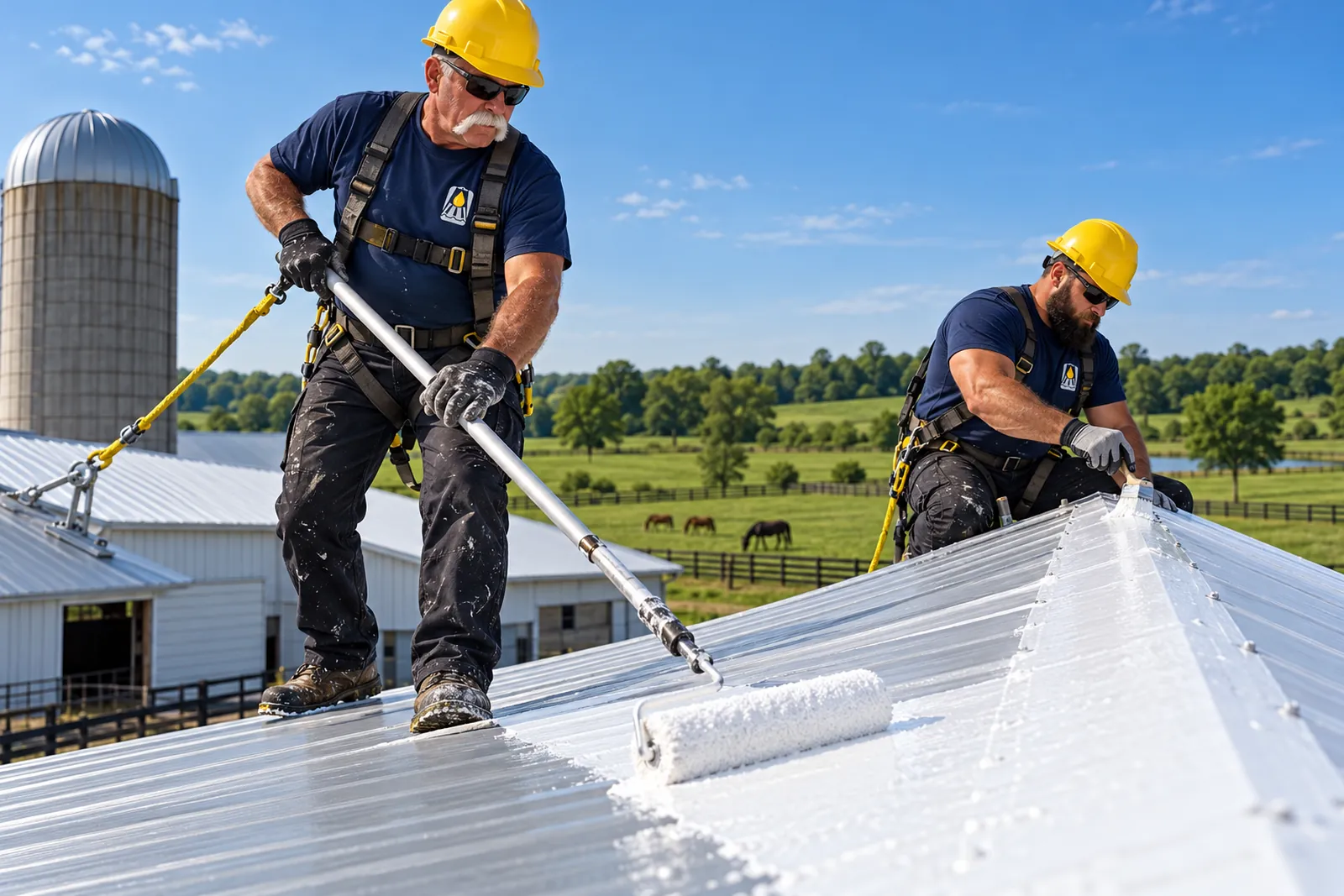
Metal Roof Coating
Exposed-fastener R-panel roofs leaking at screws and laps start with full fastener and lap prep across the field.
Metal roof coating prep and systems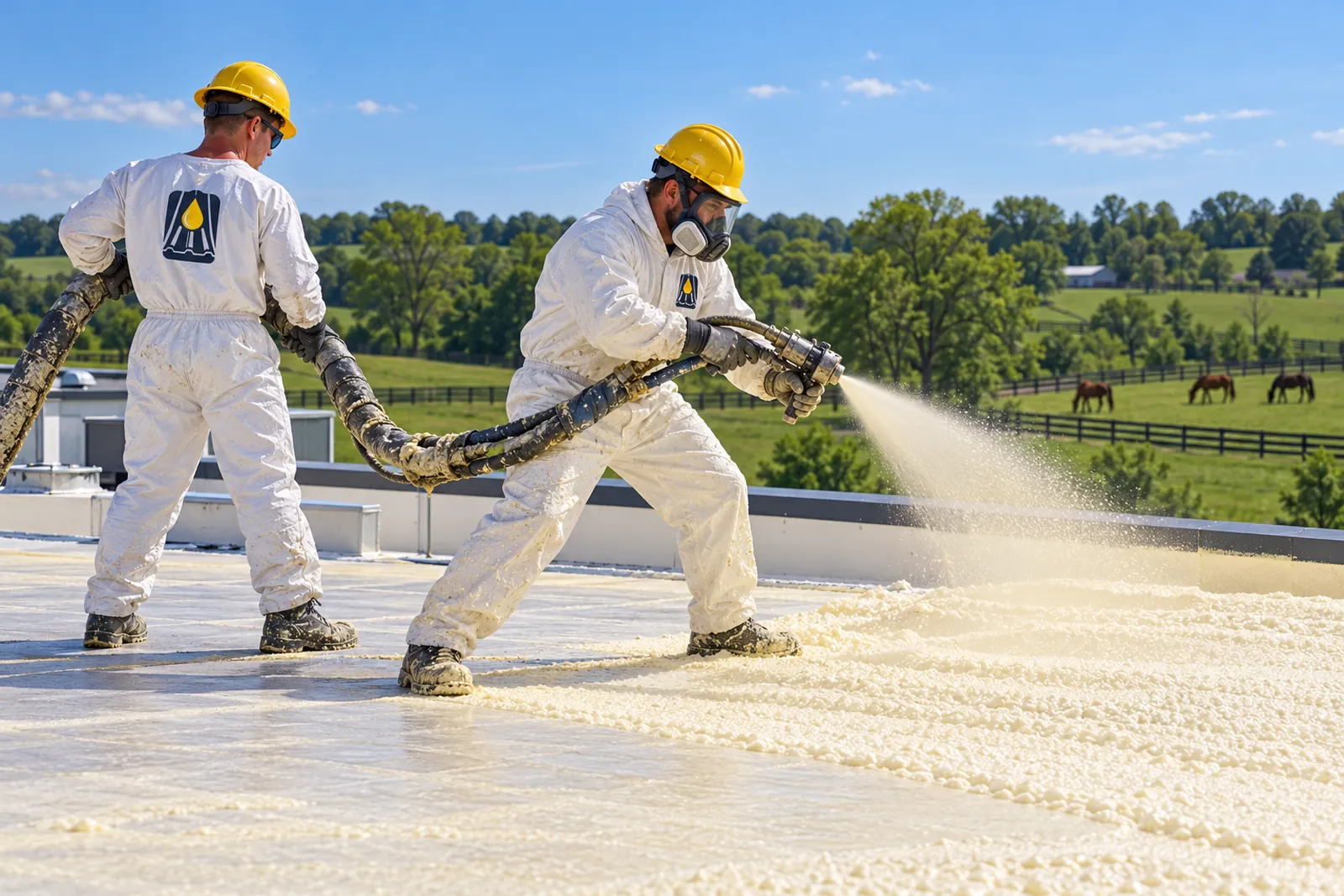
Spray Foam Roofing
Foam adds insulation over uninsulated warehouse space, though every curb then needs raising and an HVAC permit.
Spray foam roofing details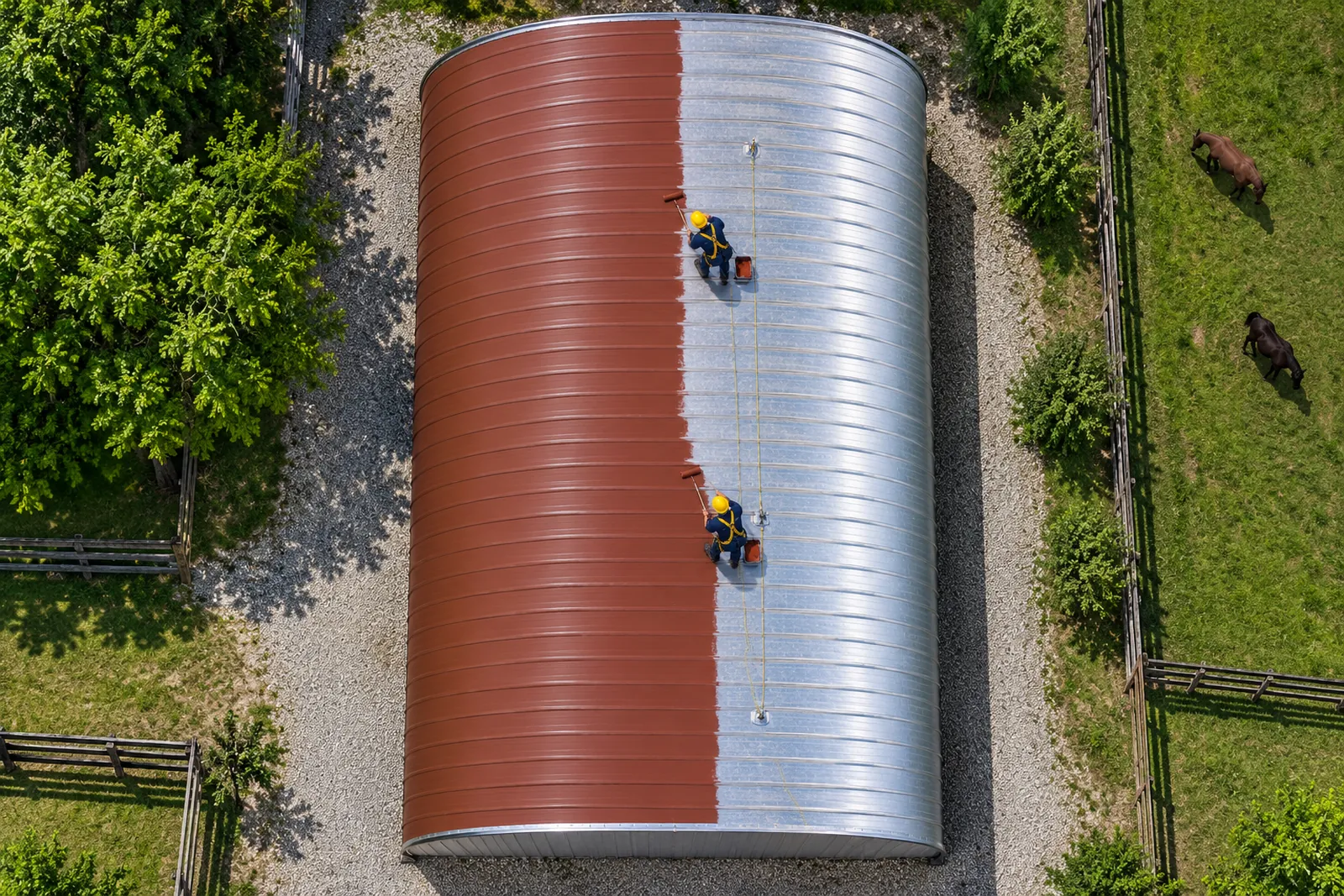
Acrylic Roof Coating
Pitched metal over loading areas that drains fast can take acrylic, which stays cleaner on large open faces.
Acrylic roof coating detailsLeaks Lined Up Under Your Rooftop Units?
Call us with how many units sit on the roof and where the leaks show inside. Curb count shapes the schedule more than square footage does.
How We Coat A Simpsonville Industrial Roof
Equipment work runs first and the field coat last. These four steps hold on every curb-heavy roof we take.
Inspect Your Roof
We walk every curb, duct support, and conduit run, count the units and disconnects, mark debris dams, and note the service paths technicians use.
Plan Shutdowns And Wiring
Unit shutdowns, intake covers, and any rewiring are scheduled with facility staff and the electrician, with electrical work waiting for its permit number.
Detail The Equipment
Curbs get fabric on their upslope sides, supports are lifted onto pads, conduit straps are sealed, and penetrations are wrapped.
Coat One Section A Day
Washing, fastener work, and the field coat move across the roof in sections, and each section is sealed before the crew leaves.
Nearby Towns We Work In
Simpsonville is one of eleven towns where we coat metal roofs. If yours sits outside this list, call us or send us a message.
| Town | County | What We See On Roofs There |
|---|---|---|
| ShelbyvilleMain Town | Shelby | Saddlebred barns, shop buildings, and warehouses with exposed-fastener panels and dried screw washers. |
| La Grange | Oldham | Low-slope metal tucked behind brick parapets downtown, with coping caps and through-wall scuppers to keep open. |
| Crestwood | Oldham | Standing seam mansards, entry canopies, and pitched metal accents that customers see from the parking lot. |
| Eminence | Henry | Farm shops and unheated equipment sheds with rust-through at the eaves and faded skylight panels. |
| Carrollton | Carroll | Eave panels and gutter outlets where trapped leaves feed rust bloom, plus dent checks after hail. |
| New Castle | Henry | Ridge caps, eave closures, and rake trim working loose on older panel roofs around the county seat. |
| Pleasureville | Henry and Shelby | Rust bloom on fastener heads, open end laps, and loose ridge caps on panel roofs in both counties. |
| Campbellsburg | Henry | Service masts and rooftop units near the eave that need clearance before fabric and coating go down. |
| Bagdad | Shelby | Pole buildings and equipment sheds with brittle fiberglass skylight panels and red rust along the drip edge. |
| Waddy | Shelby | Shops and warehouses with conduit, light fixtures, and disconnect boxes strapped across the panels. |
Simpsonville Roof Questions
Permits, equipment, and scheduling on Simpsonville industrial roofs.
Permits
Who reviews commercial roof permits in Simpsonville?
Property inside Simpsonville city limits goes to the City of Simpsonville building inspector, which the Shelby County permit guide lists separately from the county office. Electrical work tied to rooftop equipment, such as rewiring a unit lifted for curb work, goes to the county electrical inspector once a permit number exists.
Do I need a separate permit when a rooftop unit gets moved?
Moving or resetting a unit is mechanical work, and rewiring it is electrical work, so each can carry its own permit apart from the roof. We list every unit that comes off its curb so the facility's HVAC and electrical contractors can pull what they need.
Equipment
How do large I-64 industrial metal roofs in Simpsonville get coated?
Every curb flashing, duct support, and conduit penetration gets detailed before the main coating. Curb flashings take fabric where panel ribs meet the upslope side, pipe supports are lifted or set on pads, production shutdowns for intake work stay short, and the roof is coated in sections so each zone seals by the end of the day.
What about old, abandoned curbs on the roof?
Unused curbs are another leak point with nothing to gain. We point them out during the walk, and the owner decides whether to cap and flash them in place or have them removed and the opening closed before coating.
Scheduling
Can coating work run around shift changes and truck traffic?
Yes. Crews stage away from dock doors, keep the ground zone marked, and plan curb work and intake covers around shift changes. Spraying near the eaves waits until vehicles move, and each section is sealed before the crew leaves.
How is a very large roof divided into sections?
Usually by roof drains, expansion joints, or rows of equipment, so each section can be washed, detailed, and coated as one piece. The order follows the leaks, with the worst areas first, and every section is closed up at the end of its day.
Get A Free Estimate For Your Simpsonville Roof
Tell us the roof size and how many units sit on it, and we will plan a walk across the curbs and the field.